Waverly Class of 2001
Turnout doubled when we traded nostalgia for growth.
Some people have a midlife crisis and buy a sports car. I decided to organize our 25th high school reunion.
Why?
I graduated from high school in 2001 and decided that a 25th reunion would be special. Was it nostalgia? A midlife crisis? An inexplicable desire to coordinate dozens of adults with conflicting schedules? In life, I value two things above all else: health and positive human connection. I’m not exceptional in either category, but it may explain some unexpected pursuits that other people avoid at all costs, like attending a high school reunion.
Validating Demand
After the 10-year reunion, no one was lining up to organize the next one. People started asking about a 25th anyway, and not just from a single circle of friends. Interest across different groups suggested to me that we could build something with broader appeal.
Team Building
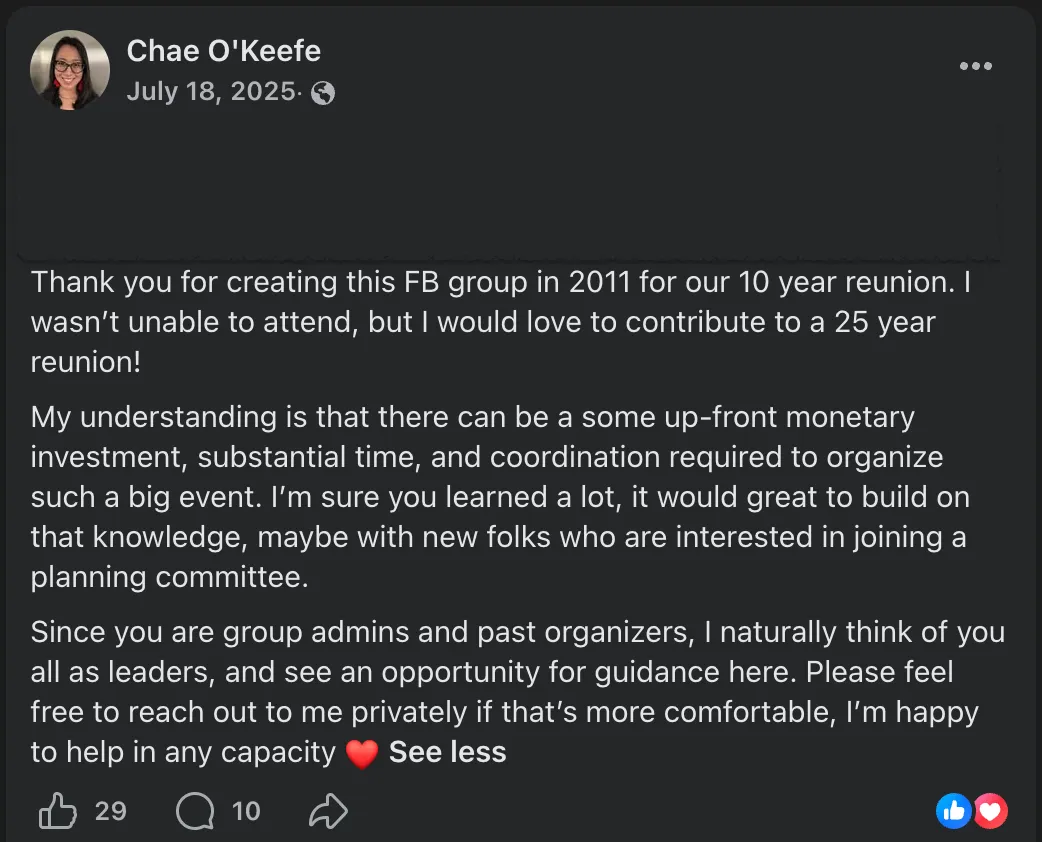
I recruited a planning team for range rather than friendship: someone from the previous organizing committee, someone experienced in public policy and communication, a venue scout, and advisors spanning different social circles. I opened with a public message crediting the people who’d organized before us and asking to build on what they’d learned. Two days later, our communications lead posted a save-the-date and invited more volunteers.
Making It Meaningful
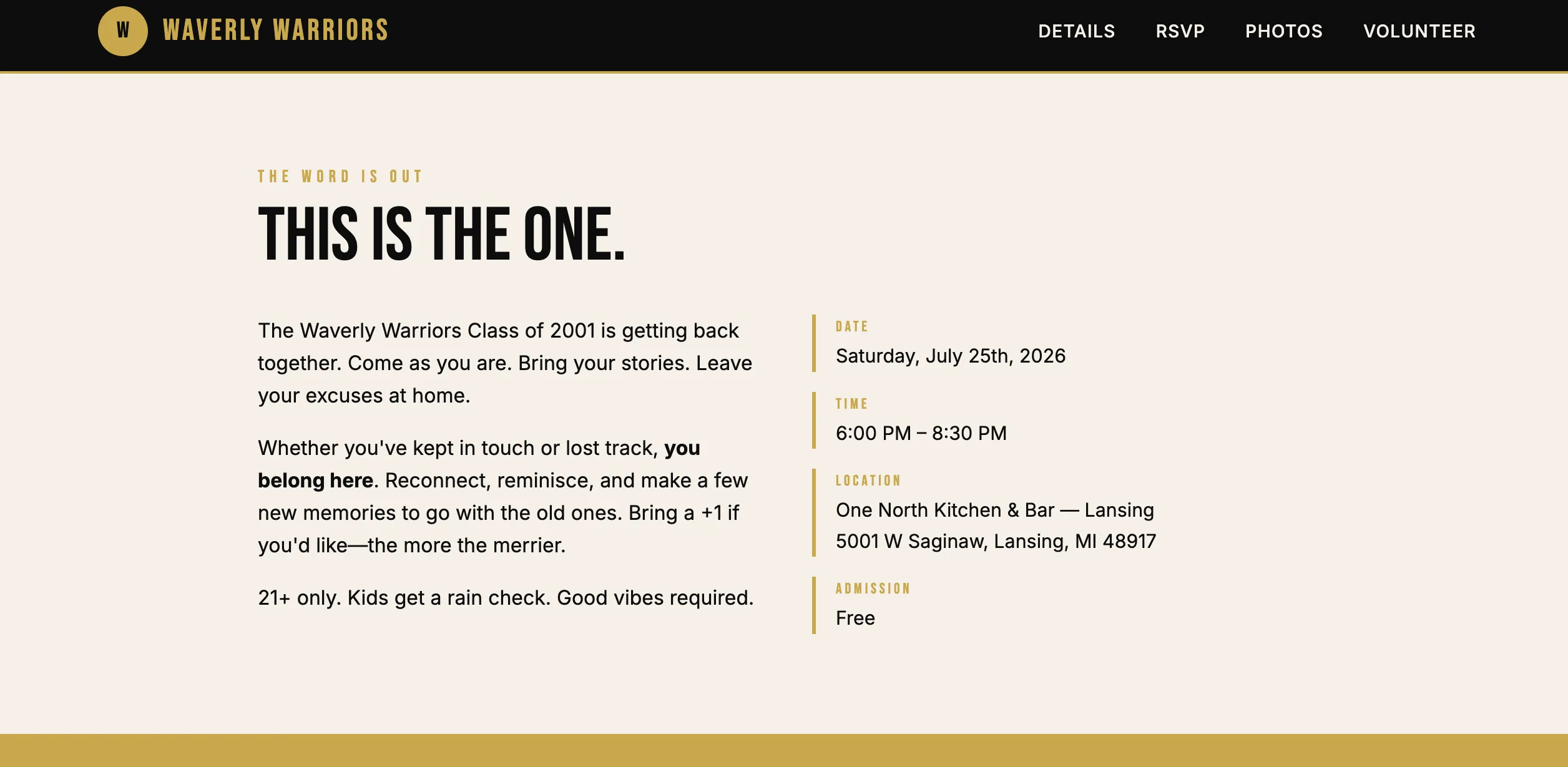
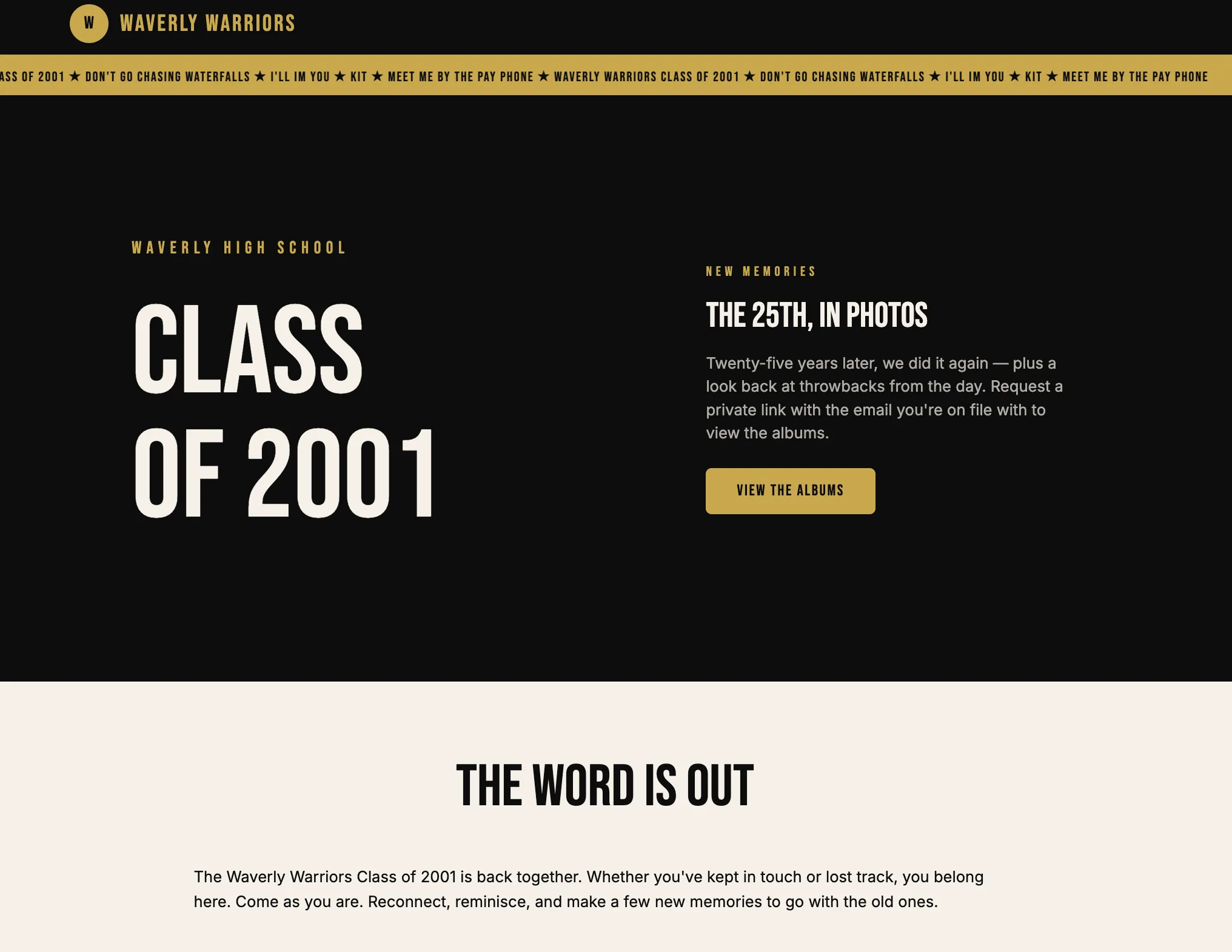
Next came a shared vision. High school hadn’t been a wonderful experience for everyone, so nostalgia alone wasn’t going to carry the invitation. The site’s tagline became “Come as you are. Bring your stories. Leave your excuses at home.” We hoped this message gave reassurance of belonging, especially for those who had not stayed in touch.
Removing Barriers
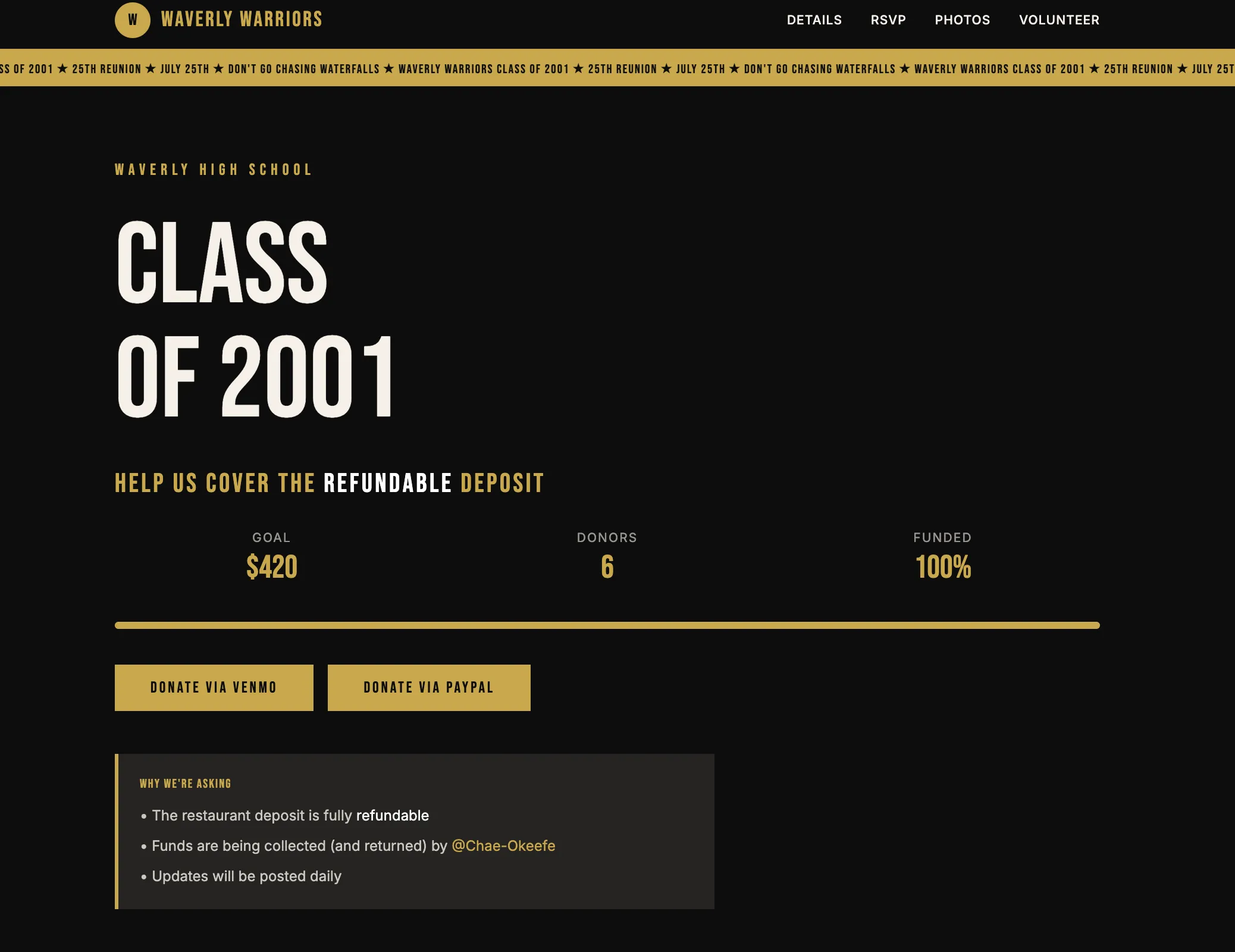
Learning from the past reunion, we made free admission a priority. Some pointed out, fairly, that charging is standard practice, since up-front costs usually fall on the organizers. Our venue scout found a spot with a refundable deposit and a collective spending minimum in our own dedicated space. Guests ran their own tab and spent what they chose. Not everyone was convinced, but with enough team buy-in, I took on the risk and signed the contract. Within 24 hours we crowdfunded the deposit, a relief on my public school teacher’s aide’s salary. Guests could bring a +1, which also made the minimum achievable.
From Interest to Commitment
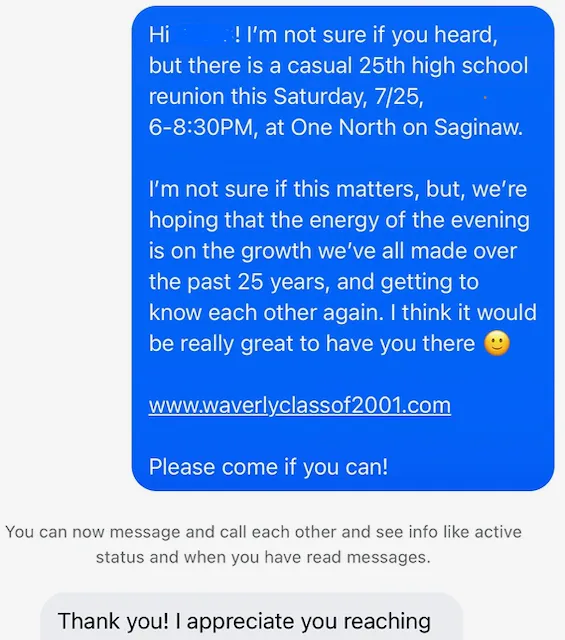
Our communications lead kept the Facebook group active with polls and conversation starters, but we doubted we could reach our whole class. The turning point was an unexpected conversation with a former classmate about how life had humbled us, and how we’d both come to see kindness as something you practice on purpose. They began reaching out to others, and I rewrote my own invitations to describe an event where we meet each other as the adults we’ve become. The event details communicated when and where. Feeling wanted, told people why.
Last Push
A few days before the event, a teammate mentioned that their spouse was hesitant to come because their own friends weren’t attending. I reached out individually to those four classmates, each unaware of how much the others wanted to see them. All four RSVPed the day before, and all four showed up.
Generosity
I’m lucky to be part of such a generous group of people. Without being asked, classmates ran a tour of the school building, set up a yearbook display, circulated and delivered remembrance cards, and organized the group photo. Classmates who weren’t especially close to each other pulled together a racially and socioeconomically diverse graduating class in a remarkable way.
Results
Participation more than doubled, rising from 10% of the class at our 10-year reunion to 21%. We comfortably cleared the venue’s spending minimum, and deposit reimbursements went out the day after the event. We also had 35% of the graduating class register an email through the site, giving us a durable channel we didn’t have before. Since the event, the site has become a private photo album for the class, with reunion photos, throwbacks and our yearbook in one place, giving everyone a reason to come back.
What I’m Taking With Me
Looking back, organizing the reunion used the same muscles as building a product. Before committing, I looked for signs that people across different groups actually wanted it. I recruited for range, not just friendship. Free admission became a message about who the event was for. And my biggest lesson is one I’ll bring to every team I lead. People show up when they know they matter.
By the Numbers
- 10% → 21%
- Turnout, more than doubled from our 10-year reunion
- 35%
- Of the graduating class joined the email list
- 24 hours
- To fully crowdfund the venue deposit
- 1 day
- To refund the deposit after the event